top of page

Blog

Updated: Dec 6, 2021


It isn’t officially winter yet in Canada, but it already feels like it.


A week ago, temperature was below zero. The first major snow in November greeted Brian and me just right after we ended our 14-day quarantine. I was delighted and worried - are my winter clothes enough to help me survive the cold weather?


Nov. 27, 2021. My first glimpse of snow.


We were supposed to travel last October. I was looking forward to autumn since it will also be our chance to acclimatize to the cold weather. But COVID-19 happened - my whole family and I contracted the virus, and we had to move our flight to November.


Nov. 14, 2021. Arrival at Toronto Pearson Int'l Airport


Cold as low as -15 degrees isn’t a joke for someone who has lived in a tropical country 37 years of her life, enjoyed going to the beach and soaking under the sun.


My last beach trip.

April 2019, Coron, Palawan.


After 14 days of quarantine, we went out for a walk since the weather looked great. But it was deceiving! Even with 3 layers of clothing - a thermal top, fleece, hoodie, and a winter jacket - it was chilly cold!



And just when we were about to leave our airbnb accommodation, we experienced our first snow - must be the "cold" welcome I was anticipating, and a peek to what we should be expecting.


Nov. 28, 2021. My first encounter with heavy snow.


Imagine the excitement and fear - YES, FEAR - because unlike Elsa, the cold actually bothers me. The only time I encountered snow was in 2017 when I traveled to South Korea with a college friend while the lowest temperature I experienced was in Japan at -3 degrees in autumn of 2016.


First snow (flakes) experience. Feb. 2017, trip to South Korea.


But since we made the big move to Canada, this tropical girl has to embrace the great winter cold.


Here are a few tips on how I am surviving Canada's cold weather, so far.


Disclaimer: This isn't a paid post. (How I wish soon it will be!) I'm just a loyal Uniqlo shopper. I'm sharing these tips because I've tried all these clothes myself and they worked for me.


Tip #1 - Layer up.


This is the most common advice I received from friends and relatives who have also migrated to Canada. The one thing I noticed about the weather here - it is quite unpredictable, somewhat moody (just like me when it is almost that time of the month)! It can be snowy and chilly today, and then sunny and windy tomorrow.


Establishments and houses have heater, and you’ll feel warmer once you go inside. Dressing up in multiple layers helps you adjust to the temperature because you can easily take one layer off when it feels less cold.


My go-to layering includes -


Heattech top

For those planning your winter trip to the North America or migrating as an international student, your best one-stop shop is Uniqlo. I can never get enough of their heattech products! The Japanese brand boasts of innovative fabric that generates heat from your moisture.


You can wear it as is or as your base layer.


The inside fabric is fluffy and soft on the skin.


My favorite is the ultra warm high neck shirt. It has a fitted feel and keeps you 2.25 times warmer than the regular heattech.


I bought mine for only CAD14.75 (Php 590) - a big discount compared to its original price CAD29.90 (Php 1,200).


Shopping trick: scour the store's side aisles. Discounted items are usually placed at the end of each row.


Fleece

Comfortable and soft on the skin. I wear fleece on top of a heattech top especially when it's chilly and windy, or it's below 0 degrees oustide.


Uniqlo's fleece combines the heat retention of heattech and softness of fleece.


The neck can also be styled in various ways.


I also wear fleece for bedtime because it gets colder especially at night.


Ultra light down jacket

Compact, light, and warm. The ultra light down jacket is for me by far the best jacket for traveling.


It is space-saver and does not compromise the extra layer of warmth it provides.


I was able to buy mine for CAD $25 (or Php1,000) because it went on sale! The frequent trips to Uniqlo paid off!


Sweater

Living in the city in the Philippines is not typically sweater weather, unles you are from the Northern part (Baguio, Sagada). So I only have a few of these, but they come very handy here in Canada. I prefer the oversized hoodie so you won’t feel too choked up by the 2 layers.


Tip #2 - Invest in a warm winter coat.


Winter coats are not often sold in Manila, but when you find one and it’s at a reasonable price, buy at least one or two. The best coats are those with furred hoodies as they block the snow and protect your ears from the strong, cold wind.


Uniqlo has coats priced at $250 (or Php10,000). They aren’t cheap, but they’re definitely worth the buy! It’ll keep you warm especially when it’s snowing.


The one I'm wearing is the Ultra Warm Hybrid Down full-length coat - has a triple layer construction and features a streamlined fit - which was given by Brian's sister-in-law.


Ultra Warm Hybrid Down Long Coat in olive green


You can also check thrift stores like Value Village that sell winter coats at least half of its original price. Size up one or two for easier movement especially when you have 2-3 layers of clothing on.


Tip #3 - Choose fleece or pile-lined pants.


This spells the big difference . Wearing 3 leggings cannot even compare to the warmth a fleece or pile-lined pants (warmer with a heattech leggings under).


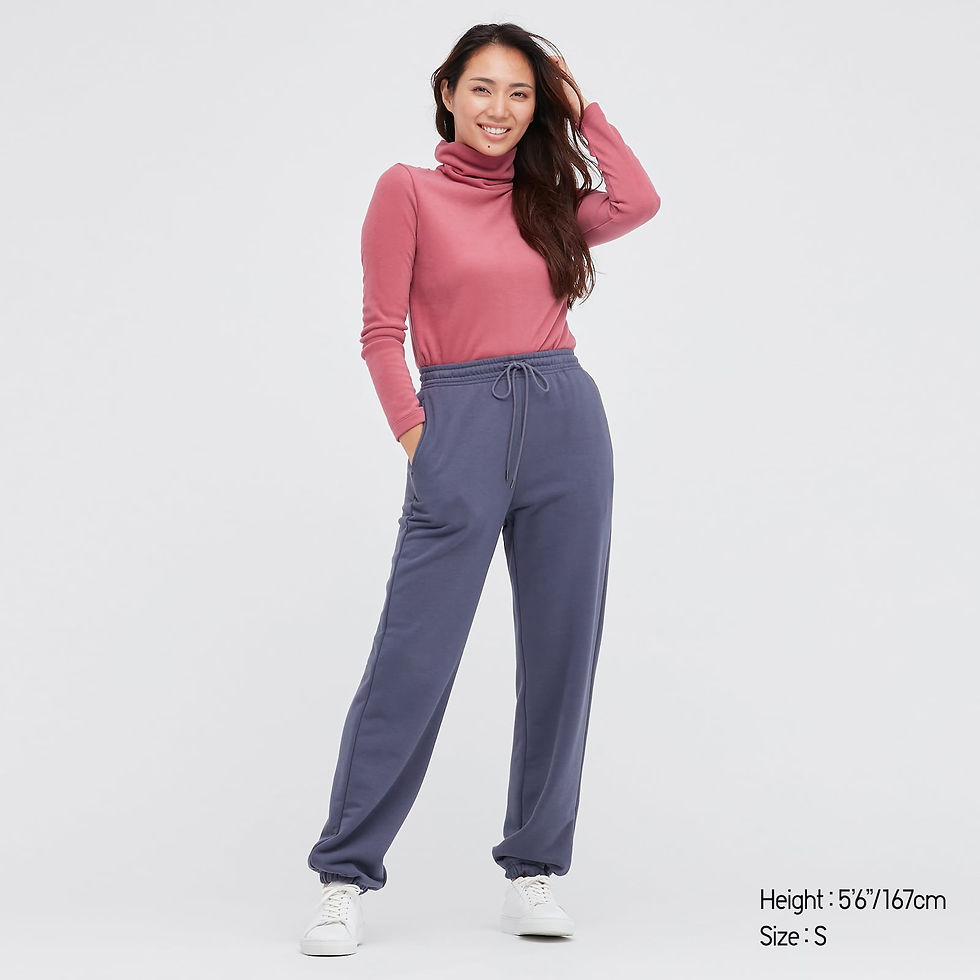
Uniqlo's heatteach pile-lined sweat pants has bio-warming and insulating features. It has soft and cozy pile lining that will keep you warm and feeling comfy whether you wear it inside or outside.


Tip #4 - Winter or snow boots - a must-have!


I brought with me a pair of rain boots which I haven’t worn in 4 years. And the biggest mistake I did was wear it outside when the temperature was at 1 degrees! I wore a pair of wool socks thinking that would suffice. But it turned out - that was not enough to keep me warm.


I wore it when we went to Service Canada at Scarborough Town Center to get our SIN or social insurance number. I did not anticipate we would be queuing outside, in the cold, for almost an hour! I was freezing and I felt the cold entering my sole.


Lesson learned the hard way - your sole needs protection, too! Always choose comfort, functionality, and warmth over feeling cute and being fashionable.


I knew that if the snow continued, I had to buy a pair of winter boots - the kind that is lined with fleece or fur. The next day, I searched online and found on Facebook marketplace a seller of a brand new gray Sorel boots who lives just 10 mins away from our place.


There are other brands you can choose from like UGG and Timberland. It all depends on your budget. You don't necessarily have to buy a brand new pair. You can find good buys from thrift stores and online marketplace - just be sure to compare the original price against the seller's offer, and the condition of the boots if they're secondhand.


Tip #5 - Buy that winter accessory!


I’ve been traveling around Asia, and it’s only in Japan and South Korea that I experienced temperature below zero degrees.


I managed to survive the cold by wearing toque or beanie, gloves, and neck warmers. But I didn't have to do it everyday.


Trip to Japan in 2016.


But in Canada, they serve a purpose. These accessories keep you warm at the right places, and help you survive the cold every time you go out.


The wind at times feels like it's slapping your ears and it will definitely hurt. A warm hat, toque or beanie that can be pulled over your ears and forehead, or a woolen headband will protect your ears.


You’ll also be needing gloves to keep your hands from feeling numb especially if you’ll be queuing and get exposed to the chilly wind.


Fleece neck warmers you can pull up and over your cheeks are essential too to keep you warmer on the cold days.


Winter's coming, but don't fret.


There are many ways to keep warm during the cold months (which can last until early April). The key is to choose wisely the clothes you will buy and wear, depending on the temperature and weather condition.

Image courtesy: Jennifer Austria Magalong


To stay warm and fuzzy, treat yourself to your favorite latte or hot chocolate...


Spiced Pumpikin Latte from Starbucks


... or wrap your loved one tightly in a warm embrace.


How do you manage the cold weather? Any other tips you want to share? Comment below, or tag me on my social media accounts.


Do you have any question or want to share your journey in applying for a study or work permit in Canada? Send me a message!


Let's build together an online community focused on supporting, helping, and lifting up each other as we navigate our new lives in a foreign land we will call, and make, our second home.


Updated: Dec 14, 2021

“An investment in knowledge pays the best interest."
- Benjamin Franklin

It’s been 17 years since I graduated from college. I’ve had several attempts of going back to school - study law or take up a master’s degree in International Relations - but I just didn’t get to finish any. I got too caught up at work that taking postgraduate studies was not my priority anymore. It took a pandemic and a job loss to help me reevaluate my choices.


College graduation in 2004. I turned 20 this day.


This year, at 37 years old, I took a leap of faith. I’m back in school as an international student in Canada. If you've been going back and forth thinking when is the right time - NOW IS THE RIGHT TIME. We don't know how long we'll be on earth, so let's make sure we are making the most out of the time that we're given.


Through this infographic, I'm sharing with you what you need to do to jumpstart your application for a DIY study permit.


There are so many things to consider in every step. Want to know more? Head over to this post for the details:


Do you have any question or want to share your journey in applying for a study or work permit in Canada? Please comment below or send me a mesage.


Let's build together an online community focused on supporting, helping, and lifting up each other as we navigate our new lives in a foreign land we will call, and make, our next home. #


“One day you will wake up and there won’t be any more time to do the things you’ve always wanted. Do it now.”
- Paolo Coelho


Updated: Nov 22, 2021

“An investment in knowledge pays the best interest.”
- Benjamin Franklin

Secure a letter of acceptance from a recognized institution.

To be able to become an international student in Canada, you need to apply first for a study permit. And to be able to do that, you have to prove you have been accepted in a college or university in Canada by securing a letter of acceptance (LOA).


What course will you take?

Are you changing careers or learning a new set of skill that complements your past work experience? How long are you willing to study? Canada offers postgraduate certificates and diplomas for professionals and these usually take one to two years to finish. There are also master’s, bachelor’s, and doctorate degrees you can choose from that may last from 2 to 3 years. Research the educational requirements of the course you want, and the documents you need to submit. Most often, the basic requirement is completion of a bachelor’s degree. You may also be asked to provide proof of your English proficiency which may be an IELTS or Duolingo test result, or a certificate of English as a medium of instruction from your last college or university.


Which intake will you enrol in?

Competition is tough specially for courses that are in demand. Check the colleges or universities offering the course you want, and which intake it is available for international students. In Canada, the intake seasons are Winter, Spring, Summer, and Fall. Slots for international students per course are limited, and there are thousands of foreigners competing for those slots. To secure a spot, be ahead of the game. Inquire about the schedule of the school in processing admissions. This will also determine when you should submit your study permit application. With the uncertainties brought about by the pandemic, you should AT LEAST have 6 months in preparation.


I enrolled for the Fall 2021 intake which started last September. George Brown College opened the application for international students for my course (Digital Media Marketing) and intake last Dec. 2020. I sent my application on the first day the admissions were opened, and the school processed it 2 months later. I received my LOA in February 2021.


Check if the school is a designated learning institution (DLI).

According to IRCC or Immigration, Refugees and Citizenship Canada, the organization that facilitates the arrival of immigrants, DLI is a school approved by a provincial or territorial government to host international students. Studying in a DLI allows international students to obtain a post-graduation work permit (PGWP) or work full-time after graduating. The length of your PGWP depends on the length of your study. It can be from a year to 3 years. For example, if your study is for 1 year, most likely you will be given a 1-year PGWP. But take note that NOT all DLI make you eligible for post-graduation work permit program which is why due diligence pays off. Click here for the complete list of DLIs in all provinces of Canada.


Where in Canada would you like to live?

The second major consideration when studying in Canada is deciding which province you will live. Does the vibrant city life appeal to you or the quieter, laid-back mood in the province or suburban? Your choice of province will depend on several factors - the cost of living, climate, accessibility of transportation, and even proximity to relatives. Living and studying abroad require adjusting in all aspects, and being able to have that emotional support from relatives is a game-changer.


You may also want to know more about the employment opportunities and different immigration pathways each province offers that are aligned with your studies and long-term goals. Is there a demand for your career? Can you apply what you have studied? The most popular choices for Filipinos are Vancouver in British Columbia because of the warmer climate, and Toronto in Ontario because of the city vibe. Manitoba, Nova Scotia, and Yellowknife are provinces ideal for families because of the easier immigration pathways through provincial nominations program. Knowing these will be very helpful so you can weigh your options.


Show proof of funds or financial support.

Studying abroad entails a lot of costs. Assess your finances. Do you have enough funds or financial support that can cover the tuition and living expenses? In Toronto, tuition for a 1-year postgraduate certificate ranges from CAD 15k to 19k. There are some colleges offering 2-year courses for CAD 24k. If you would like to take a master’s degree or doctorate degree, be prepared to shell out more. Education abroad does not come cheap, but it’s definitely worth it.


Provide bank certificates or bank statements, proof of income like payslips, tax declaration, sale of a property or car, investments in stocks or the crypto market. Remember, POF refers to cash or fund that is readily available or can be withdrawn easily.


You can also secure a Government Issued Certificate (GIC) from a Canadian financial institution. Under the student direct stream, the applicant is required to secure a GIC equivalent to a year’s worth of living expenses which is at CAD$10,000 (Php 400,000.)


If finances are not enough, but there are relatives or friends who are very much willing to support your studies, you can declare them as sponsor/s, but which will require complete documentation:

  1. Establish the applicant’s relationship with the sponsor by providing birth certificates, letters, or pictures.

  2. Submit a letter or affidavit of support (notarized) expressing the sponsor’s intent to provide financial assistance, and detailing what kind of support will be provided - Will the sponsor pay for the tuition, living expenses, or provide for the accommodation?

  3. Explain clearly the rationale or motivation of the sponsorship.


Valid passport.

Make sure that before applying, your passport is valid during your intended stay in Canada. Set a schedule with your local consular office ahead of time if you need to renew your passport. This will save you a lot of trouble and worries because you can't stay in Canada past the expiry date of your passport. They will only give a permit that's valid as long as your passport or any travel document. In case your passport expires while studying, you also have to process the extension of other Canadian visas or permits issued to you.


Write a statement of purpose (SOP).

Aspiring international students need to include a statement of purpose (SOP) in their application. This document is an essay addressed to the visa officer discussing your motivation for pursuing further studies. It is critical to present in your SOP how your studies in Canada and chosen course help you with your professional goals as well as with your short-term and long-term academic goals.


If you have checked these 4 major steps off your list - brace yourself for an adventure that will change your life and world. It surely changed mine.


Good luck on your application! :)


Do you have any question or want to share your journey in applying for a study or work permitin Canada? Please comment below or send me a mesage.


Let's build together an online community focused on supporting, helping, and lifting up each other as we navigate our new lives in a foreign land we will call, and make, our next home. #


“One day you will wake up and there won’t be any more time to do the things you’ve always wanted. Do it now.”
- Paolo Coelho


Let's connect!

  • Facebook
  • Instagram

Filipi-Know

filipiknow.canada

Thanks for submitting!

© 2021 

Proudly created with Wix.com

bottom of page